“A Flight Simulator for Medical Image Interpretation”
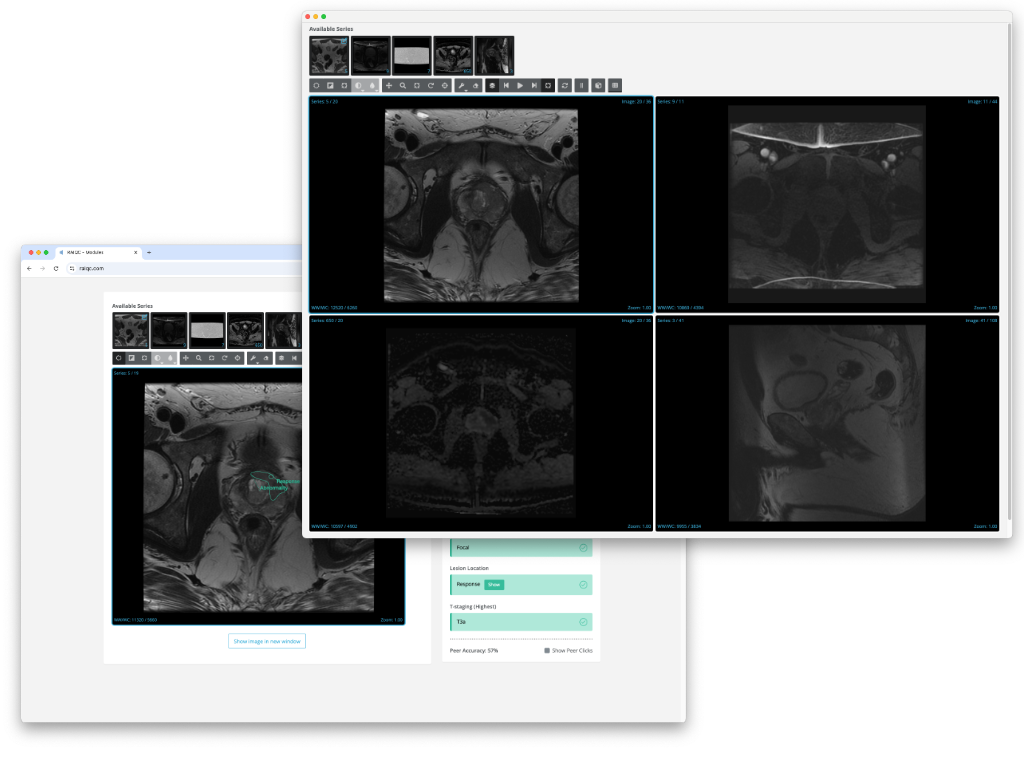
RAIQC is a web-based platform used by radiologists, medical students and educators, healthcare providers, and AI vendors to access and report on diagnostic quality medical images in a secure environment.
Education
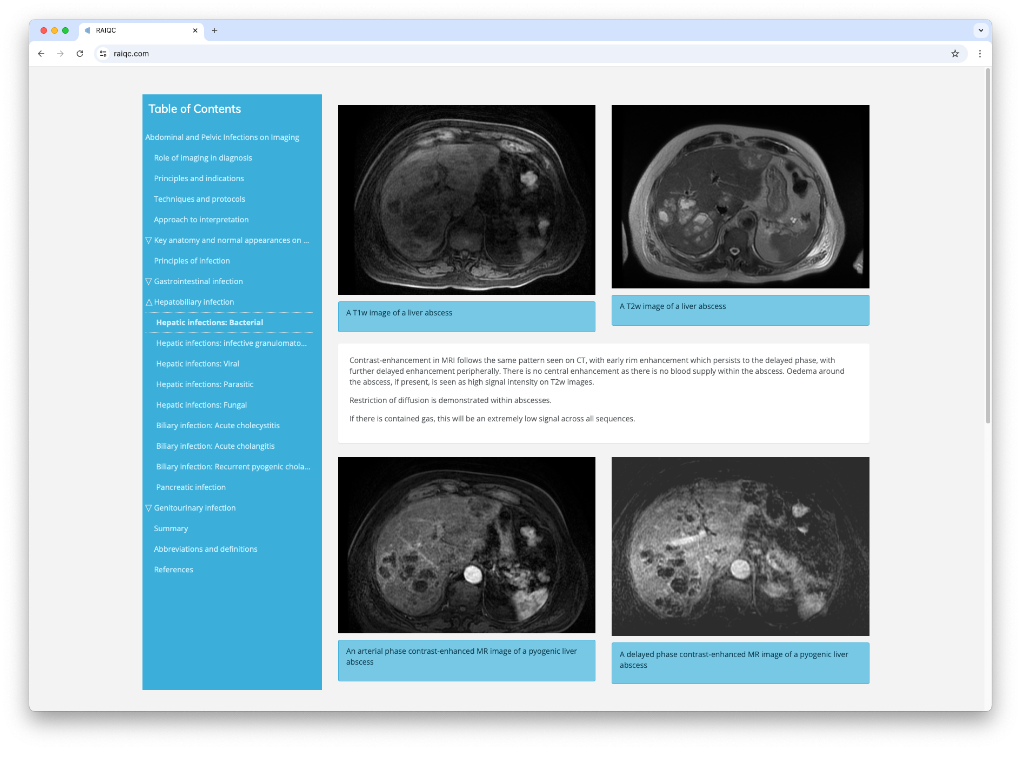
Using real-world cases curated by world-renowned experts, RAIQC’s educational curriculum is set up to to teach and assess image reporting skills across a wide range of pathologies and procedures.
Learn more
Learn more
Research & validation
Researchers, academics, and AI developers can make use of the RAIQC platform to run image-based studies or generate clinical evidence for UK, FDA and EMA regulatory approval.
Learn more
Learn more

AI Monitoring
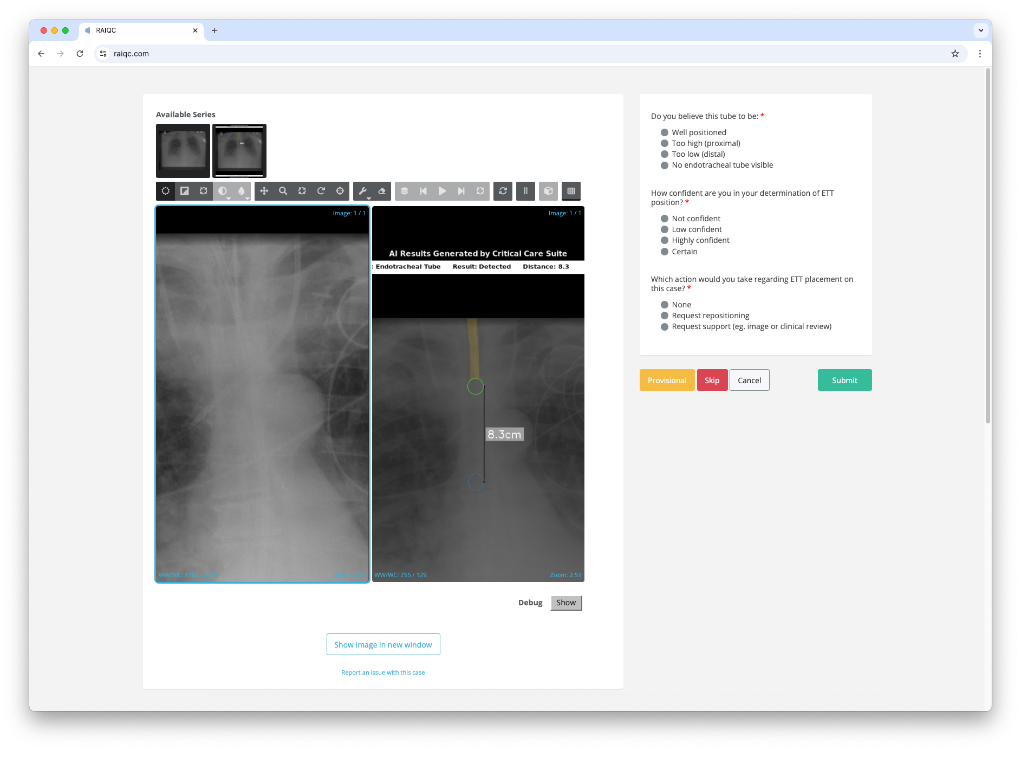
The RAIQC AIM Tool evaluates the ongoing performance of diagnostic AI, highlighting reporting discrepancies and ensuring they meet Trust expectations and AI Vendor claims.
Learn more
Learn more
"RAIQC’s ability to display DICOM images and real-world scans in a web browser played an important role in how training was delivered, enabling us to reach more trainees faster than before."
Latest RAIQC News
-
The London School of Clinical Radiology delivers SPOCA using RAIQC
SPOCA is an emergency radiology competency assessment developed by the London School of Clinical Radiology to support the assessment of whether trainees are ready and suitable to undertake on-call work. Since 2022, the London School has delivered SPOCA through the RAIQC platform.Read more Read more -
RAIQC AIM supports RCR guidance on AI Monitoring and Reporting for Radiology and Oncology Departments
The RCR suggests that post-deployment monitoring is the "MOT check for your AI tools." Just because a tool worked when it was first deployed does not mean it is still performing today. RAIQC AIM gives departments the means to check continuously and at scale.Read more Read more -
Radiographers and Nasogastric Tube Placement: RAIQC Supports International Accuracy Study
A new study published in Radiography has, for the first time, examined how diagnostic radiographers without formal CXR reporting qualifications perform in this safety-critical task. Conducted using the RAIQC clinical simulation platform, the study recruited 68 radiographers from international conferences in Europe and the UK, each of whom reviewed 15 chest radiographs featuring NGTs placed in the stomach, oesophagus, or lung.Read more Read more